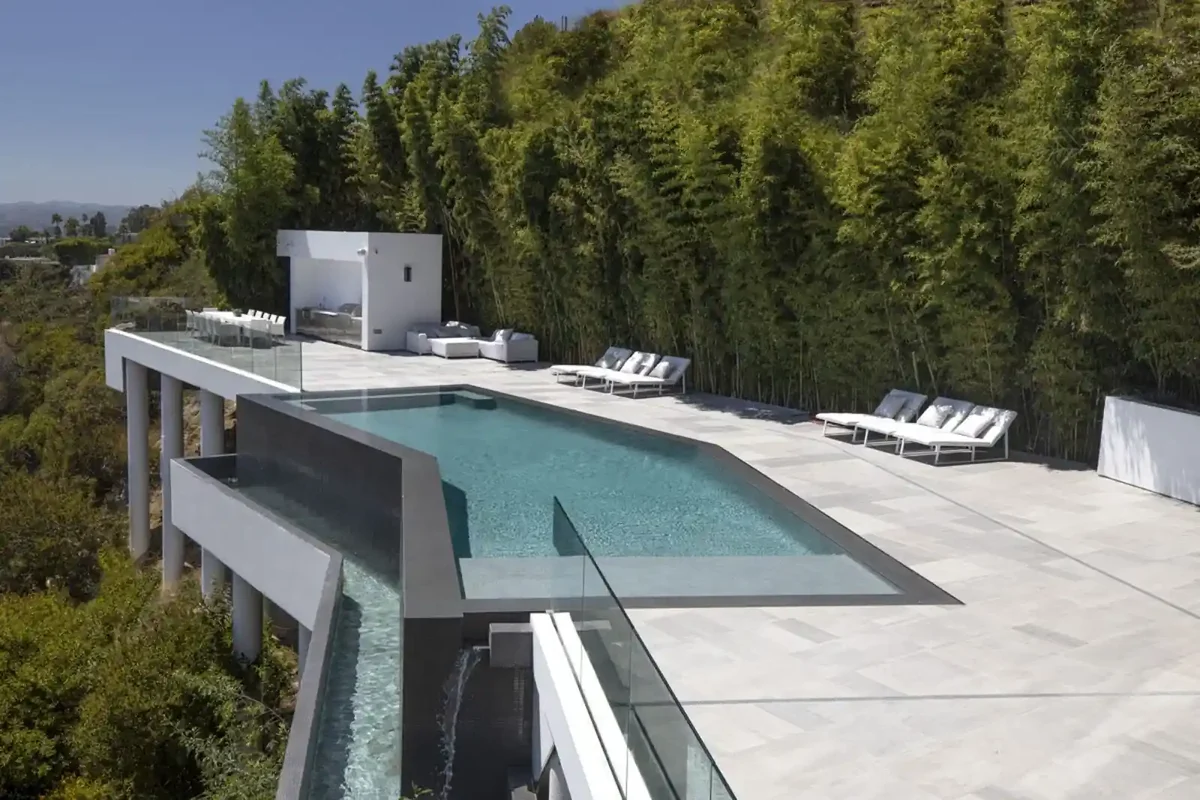
Joelle Uzyel takes Miami projects as a regular market. Bayfront houses and tower residences in Miami Beach, Coconut Grove, Brickell, Fisher Island, and Coral Gables. French Modern interiors specified for salt, humidity, and sun. Design-build from the Beverly Hills studio with site visits. $250M+ portfolio. Featured in Architectural Digest, Elle, and WSJ.
The Direct Answer
Hiring an interior designer in Miami is a climate job and an approvals job. Salt, humidity, and sun decide the materials. Miami Beach, Miami-Dade, Coral Gables, and building associations each run their own review. Every project is scoped individually, and the design investment is set out in writing after the first meeting. The practice is based in Beverly Hills, designs and builds under one studio, and already runs Miami work with site visits and local vendors.
This Market
The architecture is not one language. Miami Beach waterfront is glass, stone, and the bay as the first room. The Grove is canopy, older estates, and a plan that has to work for family. Brickell is a tower floor plate. Coral Gables is Mediterranean volume with a protected street face. Fisher Island is private, ferry-access, and quieter than the city it sits next to.
The climate writes the specification. Salt air corrodes cheap metals. Humidity gaps the wrong floors. Sun at the terrace bleaches stone and kills the wrong fabric in a season. Impact-rated openings belong in the drawings, not as a substitution after the frame is up. Outdoor living is not a terrace added later. It is the plan.
Approvals decide the calendar before finishes do. A tower package that is incomplete waits on the association. A waterfront house that is incomplete waits on the city. The first conversation belongs with the designer, before a contractor prices a kitchen that the building or the flood zone will not allow.
Bayfront houses and oceanfront condominiums. North Bay Road, the Venetian Islands, and the ocean strip. The view is the first material. Impact glass, stone that takes salt, and interiors that stay quiet against the water. Miami Beach is its own city, with its own review, not a Miami-Dade formality.
Established estates under the canopy, where warmth and texture matter more than gloss. Older plans, more garden, more family. The work is to make the house live now without stripping the Grove out of it.
Full-floor and penthouse residences in the towers. The constraint is the floor plate, the elevator, and the association. Millwork and layout have to make a high-rise plan feel like a home. Delivery windows and work hours are part of the design calendar, not a surprise at install.
Private island residences reached by ferry. Discretion is the brief. Restrained palettes, stone selected at the slab, finishes chosen to age on the water. Logistics decide the schedule as much as the drawings do.
Mediterranean and City Beautiful houses with a public face the city expects you to keep. Review is slower and more specific than a typical Miami renovation. The interior can be current. The street elevation usually cannot pretend the house is new.
Yes. The practice is based in Beverly Hills and takes Miami work as a regular market, not an exception. Recent Miami work includes waterfront residences in Miami Beach and Coconut Grove. Design is directed from the Beverly Hills studio, with site visits and South Florida vendor relationships already in place.
Miami Beach, Coconut Grove, Coral Gables, Brickell, Fisher Island, Bal Harbour, and Sunny Isles. The practice takes on projects throughout South Florida when the scope and the client are the right fit.
It depends on the house. Scope, structural work, custom millwork, stone selected at the slab, and the local review process are what move a Miami budget, and every project carries a different mix. I scope each project individually and put the design investment in writing after the first meeting and a site visit. Construction costs come from the contractor's bid, which I help you read.
Waterfront and high-rise construction carry their own rules: flood and impact requirements on the bay, association packages in the towers, materials that survive salt. The same design-build model that runs in Beverly Hills applies here. One firm holds the drawings, the approvals, and the contractor coordination.
The design phase includes the drawings and finish schedule an association or building management requires. Construction is coordinated with contractors who already know elevator reservations, delivery docks, and work-hour rules. A tower job that ignores those constraints stalls at the loading dock, not on the drawings.
Yes. Salt air corrodes the wrong metals. Humidity moves the wrong woods. Sun fades the wrong fabrics and bleaches stone at the terrace. Finishes are selected to hold up on the water, not just to photograph well on day one. Impact-rated glass is a design decision, not a later substitution.
Both. Full-floor and penthouse residences in Brickell and Miami Beach towers, and single-family waterfront houses in Miami Beach, the Grove, Coral Gables, and Fisher Island.
A Miami Beach house is a site and a climate problem: water, flood, impact glass, outdoor rooms. A Brickell tower is a floor-plate and association problem: elevator, work hours, neighbors, a plan that has to feel like a home inside a building it does not control. They are different jobs that happen to share a metro name.
A real estate development background since 2011. She reads construction documents, permitting, and contractor coordination as core expertise. French Modern interiors built into the architecture, specified for a coastal climate. $250M and more in completed projects, featured in Architectural Digest, Elle, and the Wall Street Journal.